JavaScript for Staff Engineers
The definitive volume on architecture, trade offs, and decision records
🎁 New to JavaScript? Start free with the 3-day notes →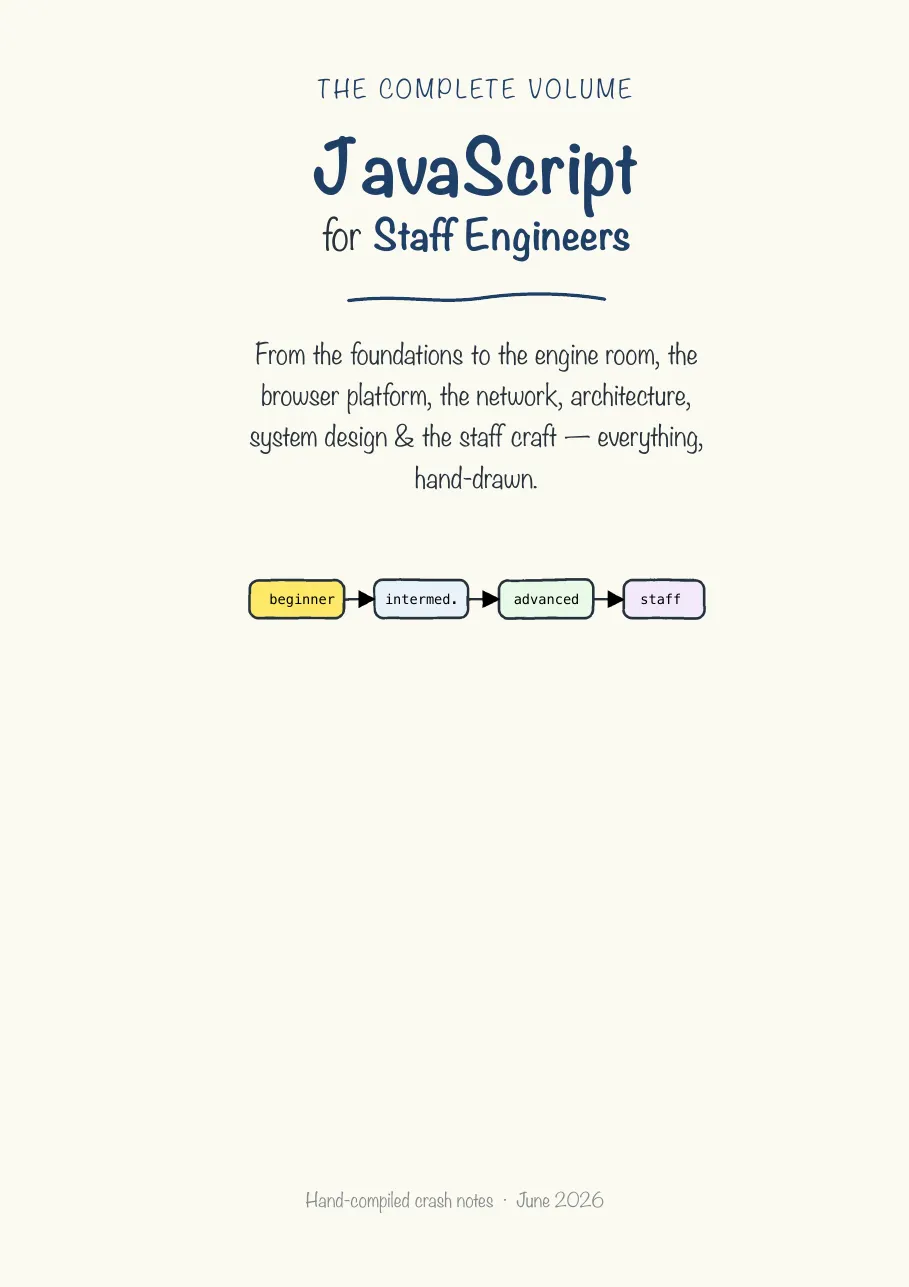
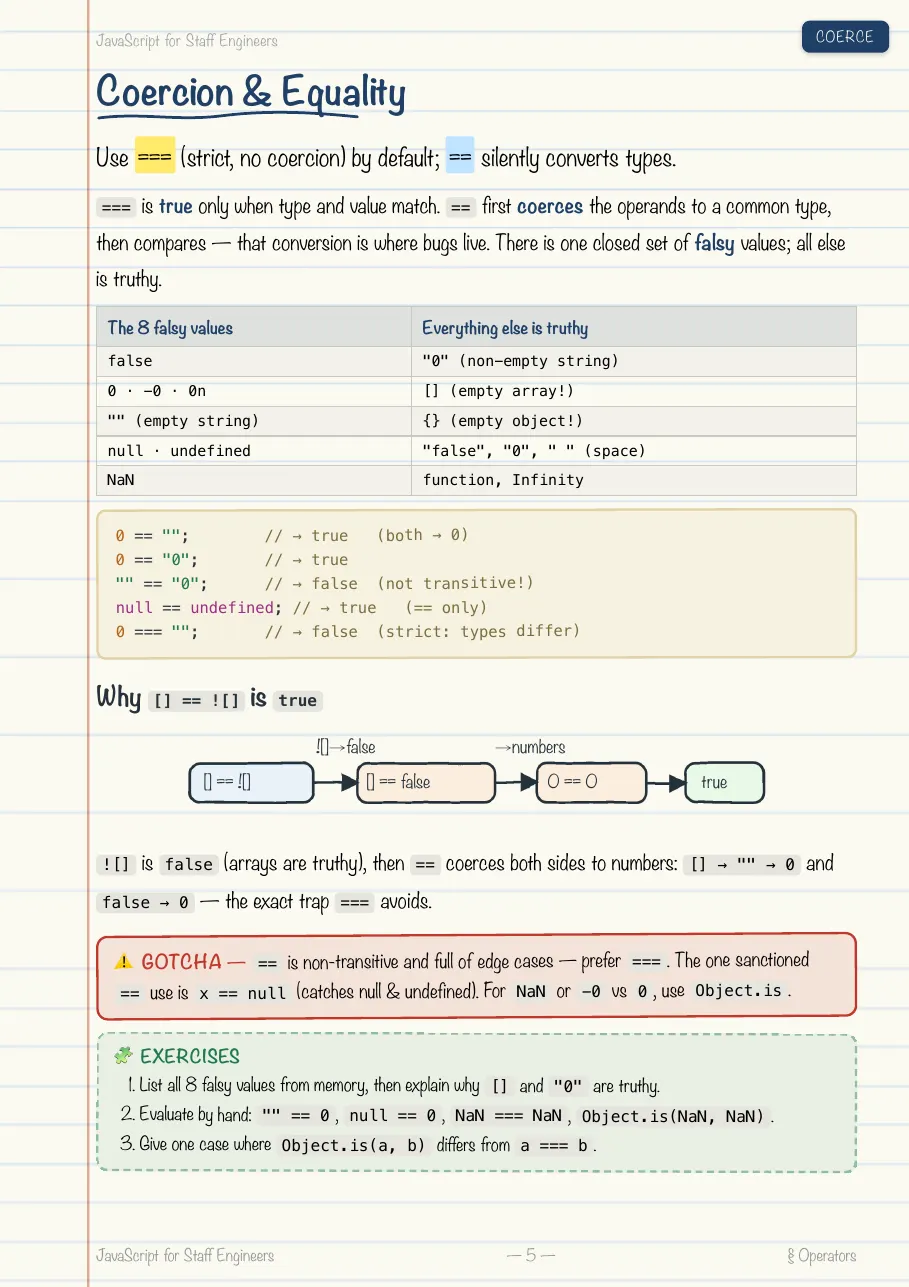
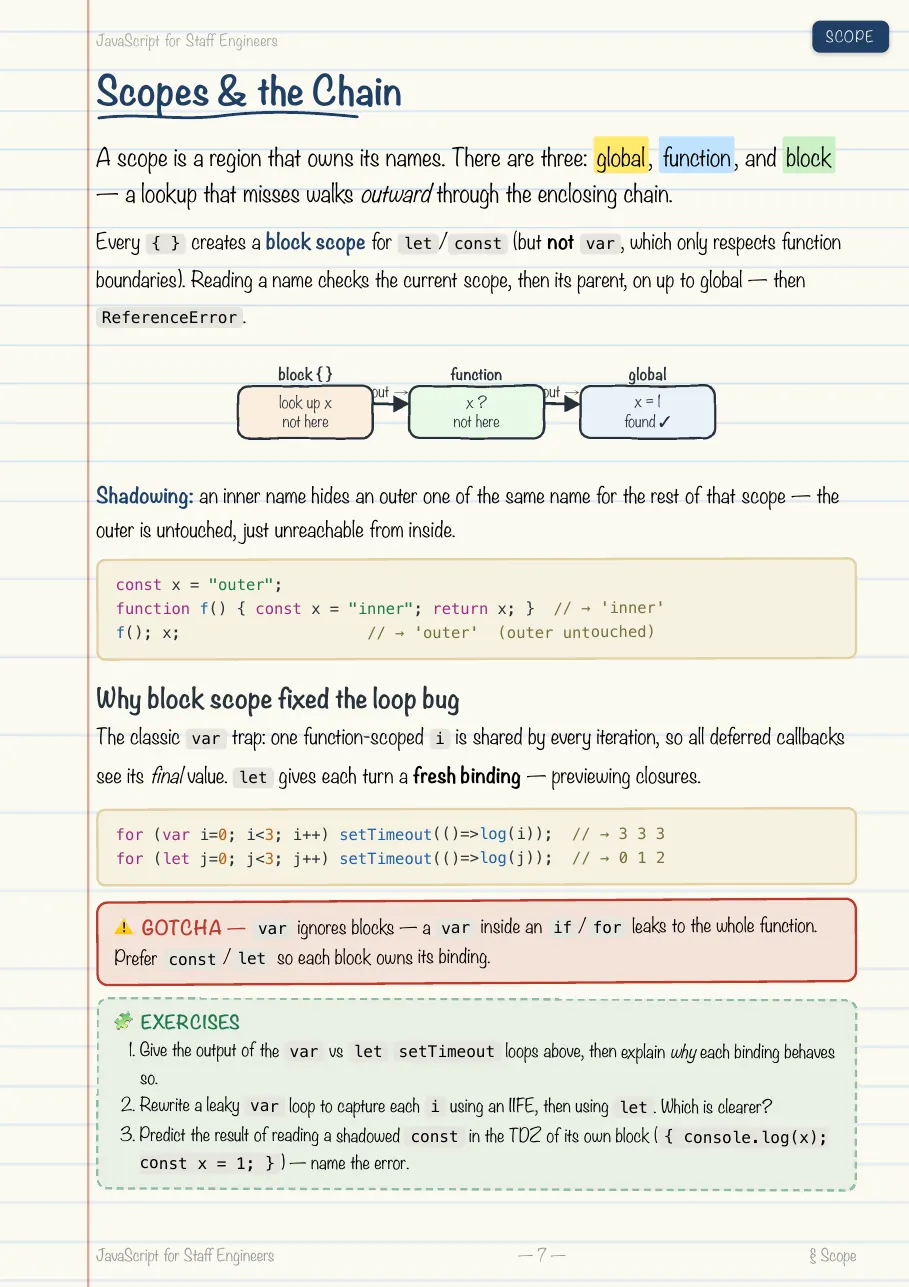
What's inside
- JavaScript at depth across performance, concurrency, and the runtime
- Trade off cards, decision records, and system design case studies
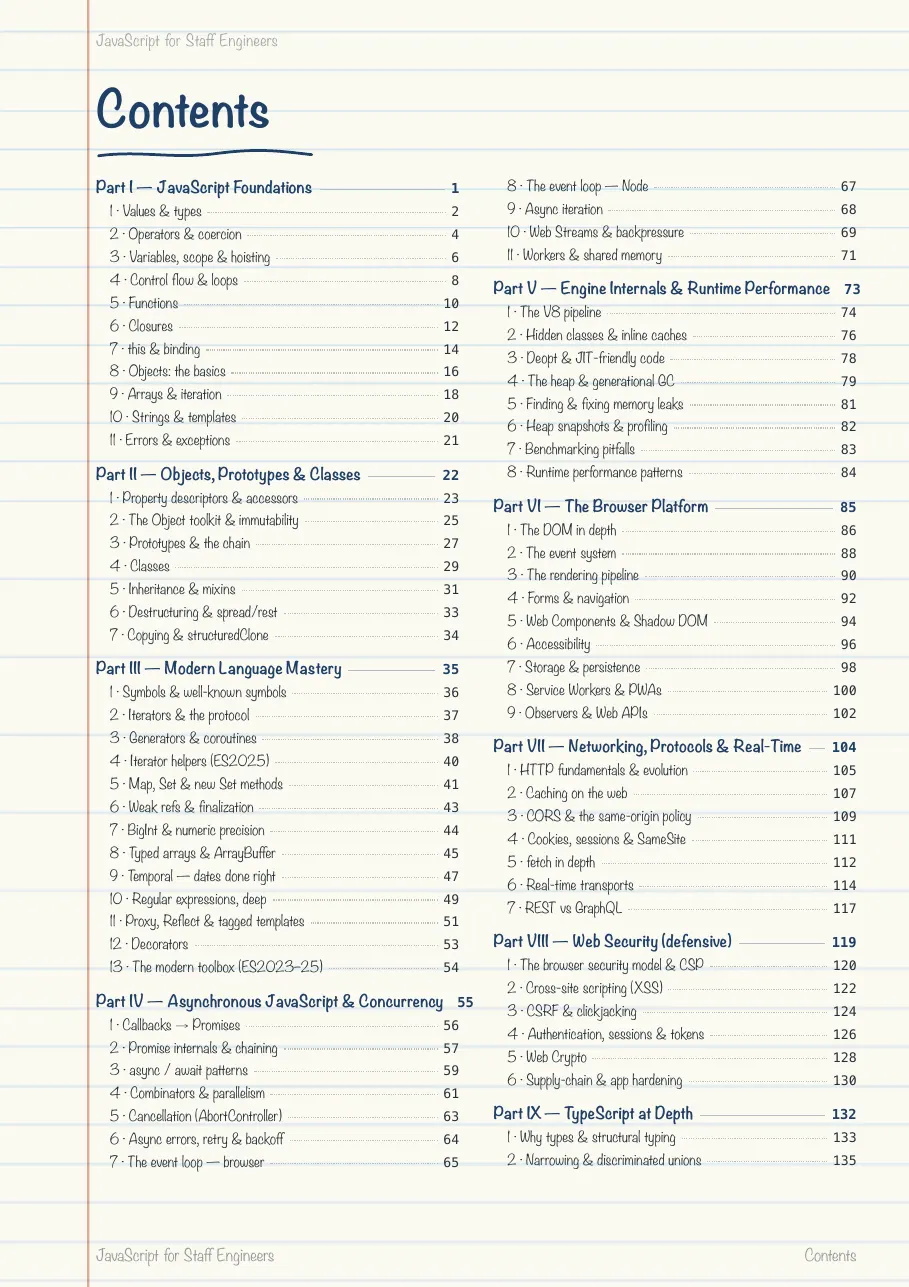
- Organised into parts, each with its own contents
- The reference you keep on the shelf for years
The parts
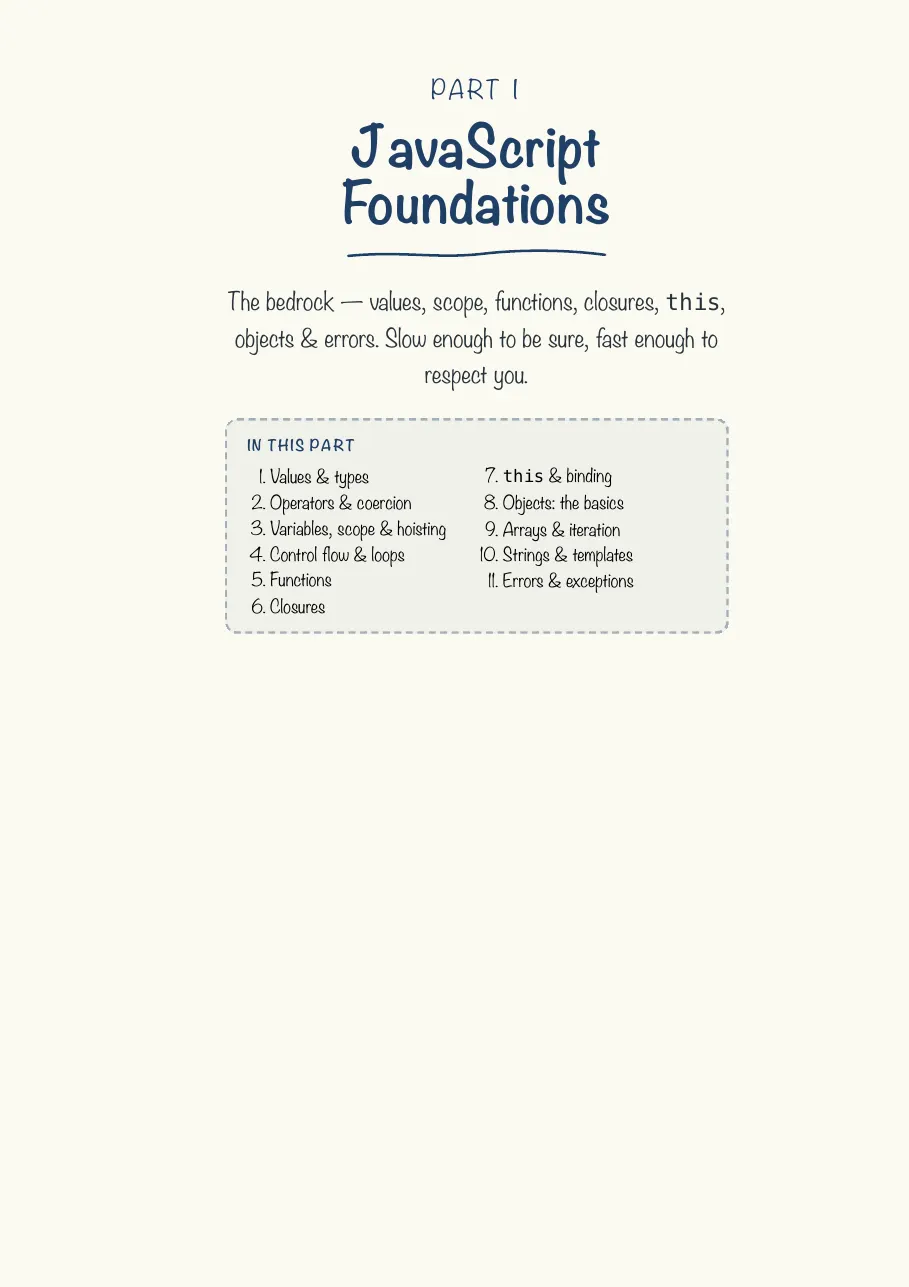
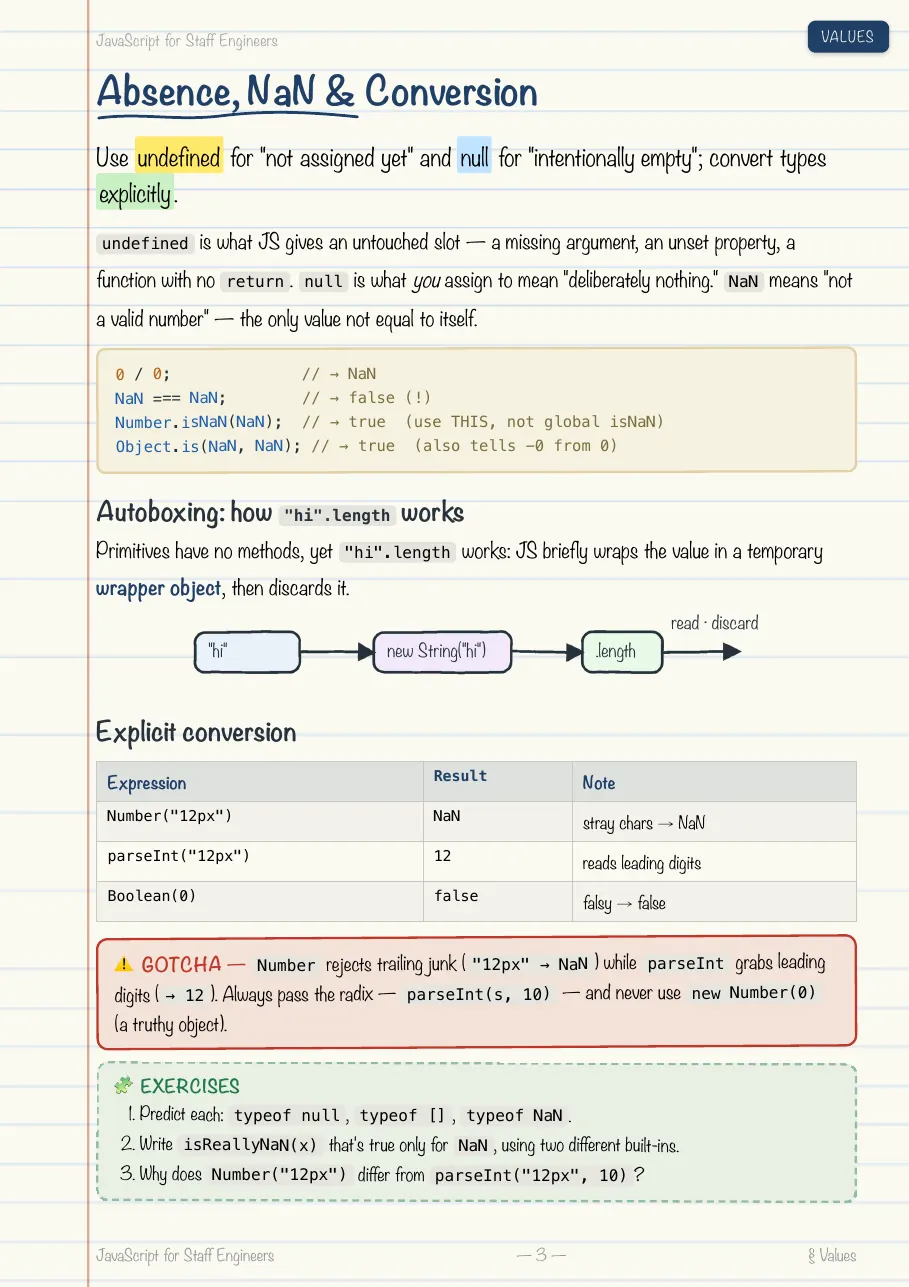
- Part I · JavaScript Foundations The bedrock, values, scope, functions, closures, this , objects & errors. Slow enough to be sure, fast enough to respect you.
- Part II · Objects, Prototypes & Classes How objects really store data, how the prototype chain powers inheritance, and how classes are the syntax on top.
- Part III · Modern Language Mastery The parts of JavaScript that arrived after the basics, protocols, metaprogramming & the toolbox that ships every year.
- Part IV · Async JavaScript & Concurrency One thread, never blocked, promises, the event loop, cancellation, streams & real parallelism with workers.
- Part V · Engine Internals & Performance What V8 does with your code, compilation tiers, hidden classes, garbage collection, and how to measure before you optimise.
- Part VI · The Browser Platform The runtime the language actually lives in, the DOM, the event system, the pixel pipeline, and the platform APIs that turn a script into an application.
- Part VII · Networking & Real-Time How bytes actually move between client and server, the protocols underneath fetch , the caching that makes the web fast, the cross-origin rules, and the transports that keep a page live.
- Part VIII · Web Security Thinking like a defender, the browser's security model and the app-developer practices that keep users safe. Every topic is framed as defense : how the platform protects users and how you configure it correctly.
- Part IX · TypeScript at Depth Types as a design tool, structural typing, inference, generics, and the type-level programming that makes a large codebase safe to change.
- Part X · Modules, Build & Tooling From source files to a shipped bundle, the module systems, package managers, bundlers, transpilers, and the tooling that turns a repo into an artifact.
- Part XI · Node.js & the Server JavaScript on the server, the Node runtime and libuv underneath it, streams and the file system, scaling across processes and threads, diagnostics, and the new runtimes (Deno, Bun, the edge).
- Part XII · Patterns & Clean Code Writing code that other people can change, the principles, the classic design patterns in their JavaScript-idiomatic form, and the functional toolkit for composition and safe data flow.
- Part XIII · Rendering & React / Next.js The one framework Part, how pages are rendered (SPA → SSR → RSC), how React actually works under the hood (fiber, hooks, concurrency), and how Next.js ties it together. Concepts first, then the tools.
- Part XIV · Architecture at Scale Keeping a large codebase soft, data flow and module boundaries, micro-frontends, API and library design, domain modeling, and the discipline of designing for change.
- Part XV · Web Performance Engineering Making it fast and keeping it fast, Core Web Vitals and how to measure them, loading and asset strategies, runtime performance, caching, and the budgets that stop regressions.
- Part XVI · Engineering Quality & Craft How teams ship reliably, testing strategy, CI/CD and progressive delivery, observability, code review and refactoring, and the documentation and quality systems that keep a codebase healthy.
- Part XVII · Frontend System Design Designing real features end to end, a repeatable framework (RADIO) and a set of worked case studies: autocomplete, news feed, chat, a collaborative editor, and a data dashboard.
- Part XVIII · The Staff Engineer's Path The dimension that isn't code, archetypes and scope, technical decision-making, design docs and strategy, leading migrations, and the influence, communication, and mentorship that define the staff+ role.
- Part XIX · Capstone & Reference Putting it all together, an ambitious capstone project that exercises the whole book, a Part-by-Part skills map, a master cheat sheet, the canon worth reading next, and a closing word.
JavaScript for Staff Engineers is the definitive volume. It covers JavaScript at the depth senior and staff engineers actually need, from performance and concurrency to the runtime, plus trade off cards, decision records, and system design case studies.
This book respects your time. No filler and no padding, just the parts that matter, in a handwritten style that is genuinely nice to read.
Preview a few pages below, then grab the PDF. It will be in your inbox in seconds.
Questions
What makes the Staff edition different?
It goes past the language into architecture, trade offs, decision records, and system design case studies, the judgement that senior and staff engineers are paid for.
What format is the book?
A print ready PDF in the same handwritten Classic Ruled style. Read it on any device or print it.
Do I need an account to buy?
No. Buy with just your email and the download link arrives instantly. You can make an account later and grab it again anytime.
Can I get a refund?
Yes. See our refund policy, and if the book is not for you, just reach out.